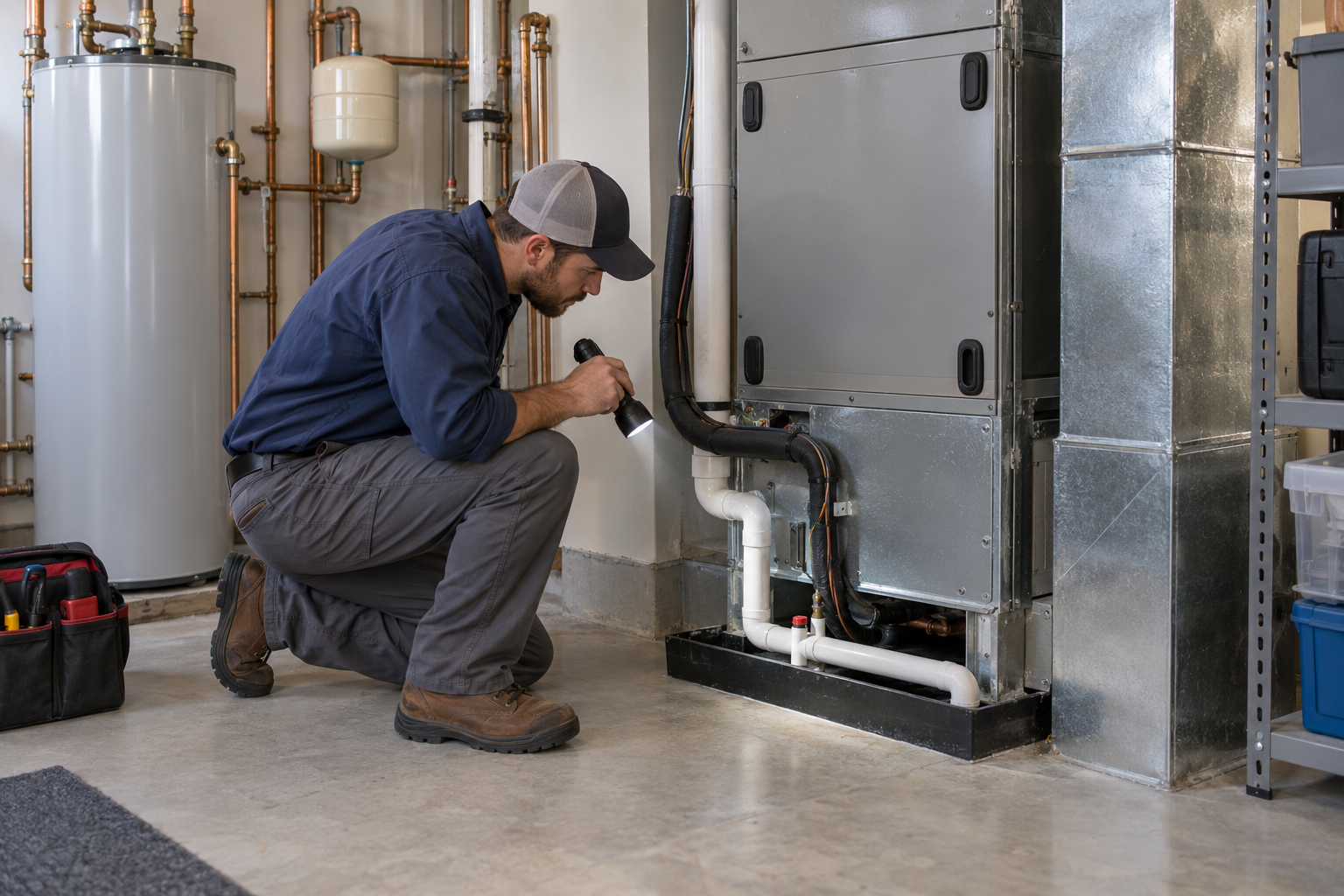
Water Around An Air Conditioner Needs Investigation
An air conditioner removes moisture from indoor air as it cools. That moisture must collect and drain through the intended components. When water escapes into a mechanical closet, attic or finished room, the equipment fault and the building damage need separate attention. Stopping the visible drip may solve one immediate problem while moisture remains in insulation, drywall or flooring nearby.
Record where water first appeared and whether the system was cooling at the time. Tell the technician about unusual sounds, reduced airflow or previous leaks, without attempting to diagnose the cause. Several conditions can produce similar symptoms, and the location of a puddle may be some distance from the original escape point.
Make A Safe Initial Response
If the equipment is leaking, stop using the affected system through its normal controls when it is safe to do so and arrange service. Keep away from wet electrical equipment and damaged ceilings. Do not enter an unsafe attic or reach inside the cabinet to investigate. An HVAC technician can establish the equipment condition and whether another qualified trade needs to attend.
Photograph the visible water and affected finishes from a safe position. If a room must remain out of use, make that restriction clear to other occupants. Avoid placing a container beneath an unstable ceiling or treating repeated collection of drips as a permanent repair. The surrounding building materials still need assessment.
Common Places A Technician May Check
The inspection may include the condensate pan, drain connections, drain route and any condensate pump. The technician may also investigate airflow or icing conditions that can contribute to water appearing outside the intended collection system. Which checks are appropriate depends on the equipment and observed fault. A blocked drain is a possible cause, but it should not be assumed without examination.
Ask for the finding in plain language. A useful explanation identifies the component, what failed and what was done to correct it. If the technician recommends a follow-up investigation, retain that recommendation rather than describing the system as fully repaired. Similar water symptoms can recur for a different reason, so the record should be specific.
Trace The Water Beyond The Equipment
A leak in an attic or upper-floor closet can affect finishes below and concealed materials between levels. Insulation, wallboard and cabinet bases may remain wet after the mechanical area looks tidy. Look for staining or changed finishes in adjoining rooms, but leave concealed inspection to the appropriate contractor. A dry-looking patch cannot show the condition of every layer behind it.
Tell the restoration provider which equipment was involved and share the technician’s diagnosis. This helps distinguish condensate water from another source that might still be active. Where multiple systems occupy the same room, avoid assuming every damp area belongs to the air conditioner merely because its drain required attention.
Coordinate HVAC Repair With Building Restoration
The HVAC scope concerns the equipment and drainage fault. The restoration scope concerns affected building materials and contents. Edmonton Water Damage Restoration’s external overview of water damage restoration can help explain the wider recovery process. For the actual property, agree who assesses the wet assembly and who confirms that it is suitable for rebuilding.
Keep the sequence clear: address the source, assess the affected area, carry out the appropriate cleanup and drying, then reinstate finishes. Some tasks can overlap, but closing a cavity before its condition is understood can make follow-up harder. Ask the providers to communicate any access requirements before one trade conceals an area another still needs to inspect.
Ask About Drainage Protection And Maintenance
After the repair, ask which maintenance tasks apply to the installed model and drain arrangement. The technician can explain access points, service needs and whether existing protective controls work as intended. Where an auxiliary pan, overflow control or condensate pump is part of the installation, ask what was checked. Do not assume all systems have the same accessories or require the same service interval.
Keep drain routes accessible and retain the equipment information. If renovations change the mechanical space, tell the HVAC contractor before cabinets or finishes restrict access. A drain that cannot be inspected easily can make a future fault harder to locate. Maintenance instructions should identify a task and responsible person rather than a vague reminder to check the air conditioner.
Keep A Useful Repair And Damage Record
Combine the equipment report with photographs of affected building materials. Record the observed leak date, repair performed and any separate restoration work. If an insurer or property manager is involved, provide factual records through the agreed process. An equipment invoice does not establish a coverage outcome or prove that every related material was restored.
At handover, ask which restrictions can end and which recommendations remain open. Confirm who should be contacted if water reappears. A concise record helps the next technician understand the earlier finding without assuming the same component has failed again. It also gives the finishing contractor a clearer account of what happened behind the repaired surface.
If cooling is temporarily unavailable, discuss a suitable comfort plan for occupants without restarting leaking equipment. Keep that operational arrangement separate from the repair decision and follow the technician’s advice.
Common Questions About Condensate Leaks
Is A Small AC Leak Harmless?
A small visible leak can still reach a concealed or moisture-sensitive material. Its significance depends on where water travels and how long the condition continues. Arrange an equipment assessment and check the affected building area instead of judging the problem only by the size of the puddle.
Can The Air Conditioner Dry The Damage?
Normal cooling is not a substitute for a restoration assessment, especially while the equipment itself is faulty. Ask the technician when it can operate again and let the restoration provider determine the appropriate drying approach for the affected materials.
Should I Put Chemicals Into The Drain?
Follow the equipment manufacturer’s instructions and qualified service advice. Improvised chemical treatments can be inappropriate for the installed components and may not resolve the actual fault. Describe the symptoms to the technician and ask for the maintenance method suited to that specific system.
Easy steps to create a color palette
Lorem ipsum dolor sit amet, consectetur adipiscing elit lobortis arcu enim urna adipiscing praesent velit viverra sit semper lorem eu cursus vel hendrerit elementum morbi curabitur etiam nibh justo, lorem aliquet donec sed sit mi dignissim at ante massa mattis.
- Neque sodales ut etiam sit amet nisl purus non tellus orci ac auctor
- Adipiscing elit ut aliquam purus sit amet viverra suspendisse potent
- Mauris commodo quis imperdiet massa tincidunt nunc pulvinar
- Excepteur sint occaecat cupidatat non proident sunt in culpa qui officia
What is a color palette?
Vitae congue eu consequat ac felis placerat vestibulum lectus mauris ultrices cursus sit amet dictum sit amet justo donec enim diam porttitor lacus luctus accumsan tortor posuere praesent tristique magna sit amet purus gravida quis blandit turpis.

Don’t overspend on growth marketing without good retention rates
At risus viverra adipiscing at in tellus integer feugiat nisl pretium fusce id velit ut tortor sagittis orci a scelerisque purus semper eget at lectus urna duis convallis porta nibh venenatis cras sed felis eget neque laoreet suspendisse interdum consectetur libero id faucibus nisl donec pretium vulputate sapien nec sagittis aliquam nunc lobortis mattis aliquam faucibus purus in.
- Neque sodales ut etiam sit amet nisl purus non tellus orci ac auctor
- Adipiscing elit ut aliquam purus sit amet viverra suspendisse potenti
- Mauris commodo quis imperdiet massa tincidunt nunc pulvinar
- Adipiscing elit ut aliquam purus sit amet viverra suspendisse potenti
What’s the ideal customer retention rate?
Nisi quis eleifend quam adipiscing vitae aliquet bibendum enim facilisis gravida neque euismod in pellentesque massa placerat volutpat lacus laoreet non curabitur gravida odio aenean sed adipiscing diam donec adipiscing tristique risus amet est placerat in egestas erat.
“Lorem ipsum dolor sit amet consectetur adipiscing elit, sed do eiusmod tempor incididunt ut labore et dolore magna aliqua enim ad minim veniam.”
Next steps to increase your customer retention
Eget lorem dolor sed viverra ipsum nunc aliquet bibendum felis donec et odio pellentesque diam volutpat commodo sed egestas aliquam sem fringilla ut morbi tincidunt augue interdum velit euismod eu tincidunt tortor aliquam nulla facilisi aenean sed adipiscing diam donec adipiscing ut lectus arcu bibendum at varius vel pharetra nibh venenatis cras sed felis eget.