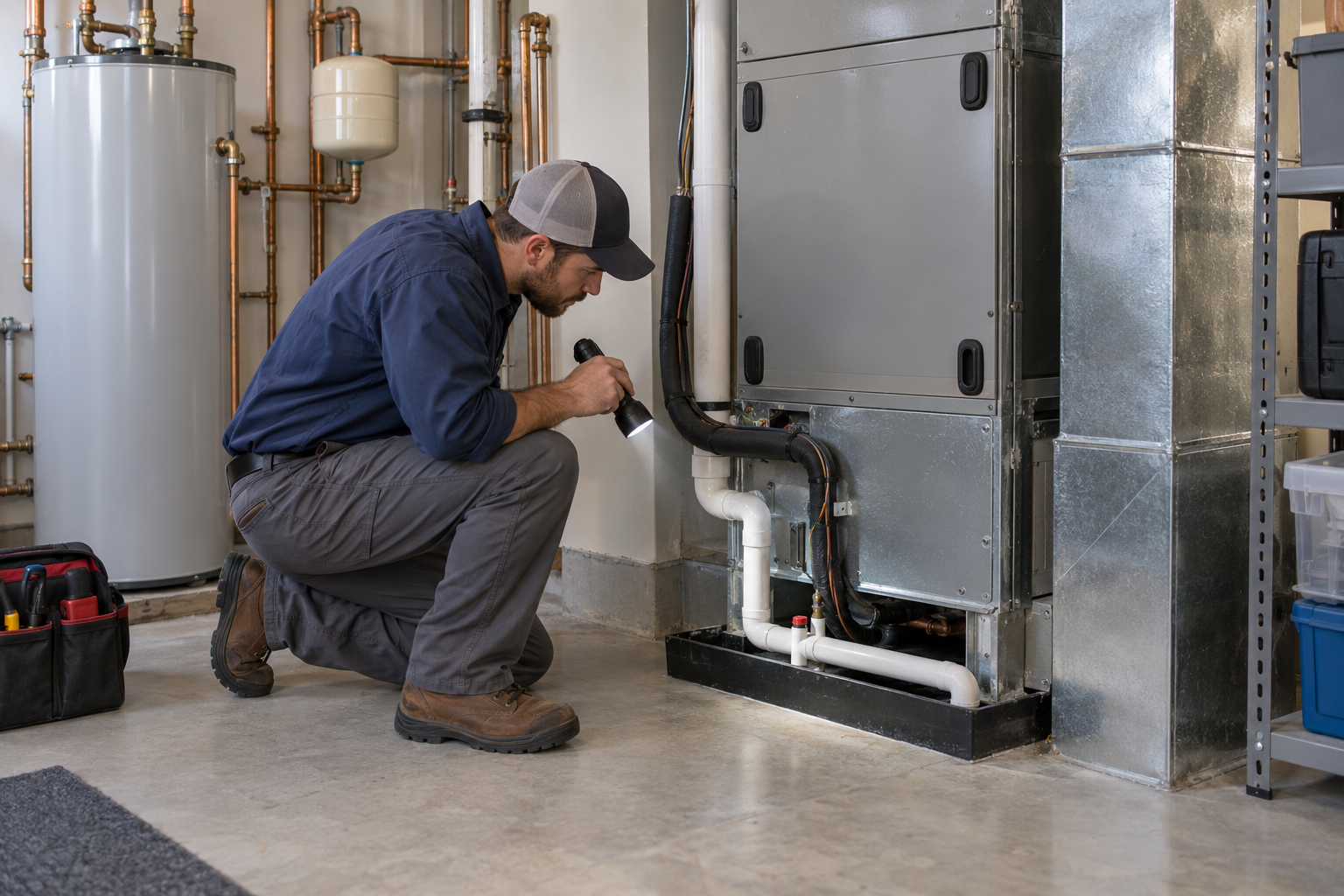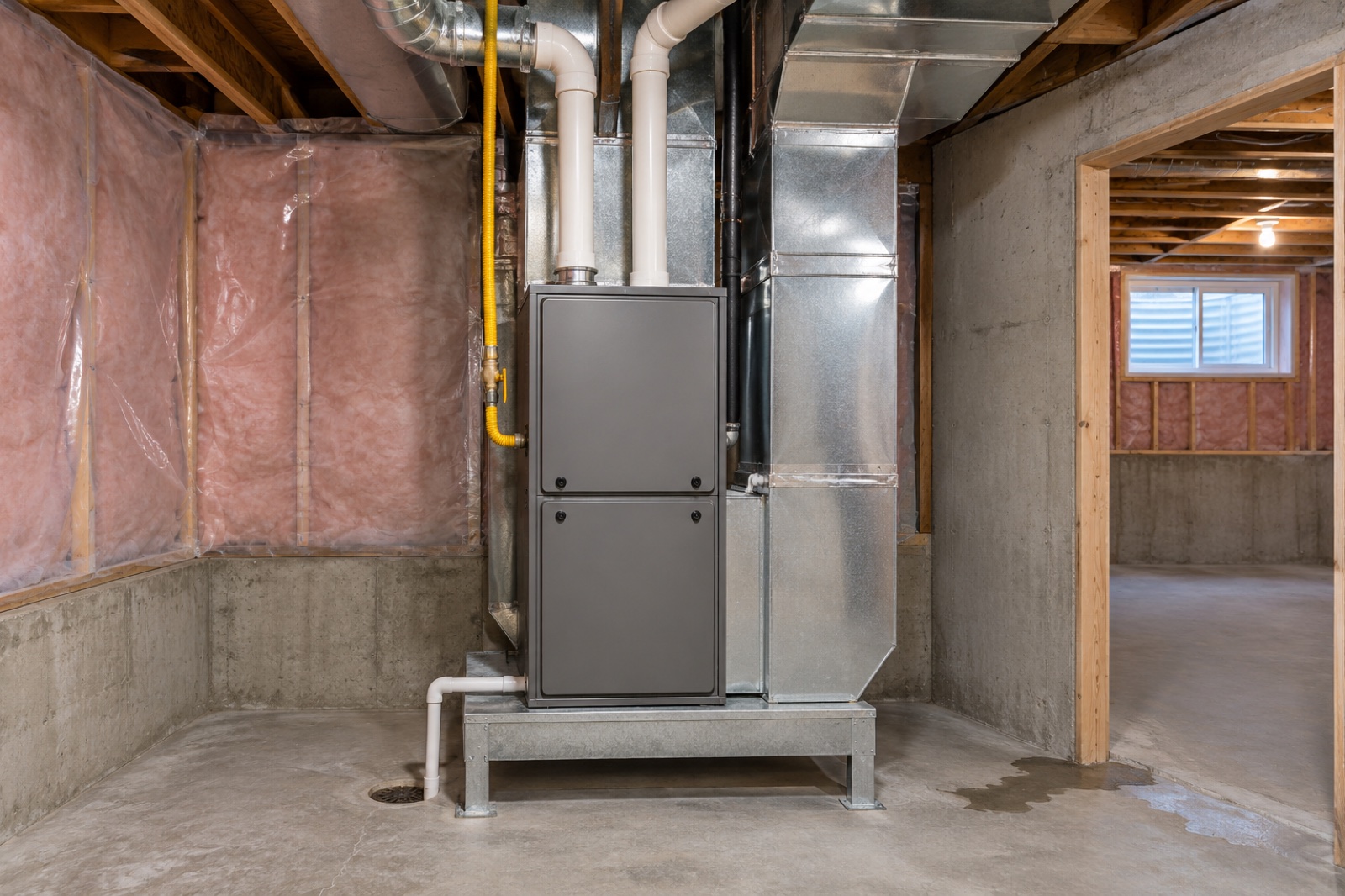
The thermostat may be upstairs and look perfectly normal after a flood. It can still call for heat from a furnace that has taken water through its base, vent connections or ductwork. A brief startup can conceal damage that appears later when a wet component fails. If water reached the equipment or its wiring, leave it off and arrange qualified inspection before attempting a restart.
Start by keeping everyone away from standing water and possible electrical hazards. If you suspect a gas leak or another immediate danger, leave and contact the appropriate emergency service from a safe location. If access to a breaker, disconnect or gas valve involves entering the affected area, leave isolation to the utility or appropriate professional. Let the HVAC technician know how the system was shut down and by whom.
Record where the water reached
Once access is safe, photograph the mechanical room from the entrance. Include the floor, equipment base, lower ductwork and any obvious debris line on a wall. If the water has receded, residue may remain in two different places. A mark on a wall shows where water stood at that spot. A separate streak on a cabinet can come from leaking overhead pipework. Record both, with the date and the source if you know it.
Water depth alone tells only part of the story. A high-efficiency furnace may have condensate tubing or a pump near the floor even if the cabinet sits on a stand. A finished basement can have return-air openings or ducts below the bottom edge of the furnace. Give the technician a picture of the whole room, including any nearby humidifier, water heater, air handler or electrical panel. A photo of the equipment label may help them bring the current manufacturer information, provided you can take it safely without touching the unit.
If a drain line leaked near the appliance, find out whether the furnace and air conditioner shared the line, and tell the technician if the unit was running when the water appeared. If water came from outdoors or backed up through a drain, tell both the HVAC and restoration crews. Cleanup, replacement of affected materials and access precautions can depend on the type of water involved.
Ask what must be inspected before the heat comes back on
Some damage is visible. A wet blower compartment, a water line on the cabinet or silt inside a return opening gives the technician a clear starting point. Other affected parts may be tucked behind panels or near the bottom of the unit. The technician can identify which controls, motors, wiring and safety components may have been exposed, then check the manufacturer's instructions and applicable requirements for that model. Ask for a written record of any parts or equipment recommended for replacement.
Discuss the entire route of supply and return air. With water high enough to enter a low return duct, there may be deposits beyond the opening you can see. A technician and restoration team can assess access to the affected part of the system, the type of material and whether it can be addressed in place. Accessible bare metal presents a different problem from a concealed insulated section. If there is agreement on a scope, ask who checks the work before the system is cleared to run.
A furnace that starts on command still needs safety checks after exposure. Ask what the technician will test at commissioning, including what is appropriate for the equipment and the identified damage. If replacement is necessary, ask whether installation timing depends on drying in the mechanical room or on work by an electrician or gas fitter. Scheduling those steps in advance matters especially when heat needs to be restored before the next cold spell.
Give drying crews their own plan
An idle furnace can be inconvenient during a cold spell, and opening windows may work against both comfort and drying during cold, wet weather. Arrange a drying plan with the restoration company and discuss safe temporary heat where required. Ask who will check the electrical supply for temporary equipment. Keep outdoor combustion equipment outdoors and away from openings to avoid carbon monoxide buildup.
Drying a basement and clearing heating equipment for service are separate decisions. A moisture reading that supports replacing a wall finish does not confirm that an affected furnace control can go back into service. Conversely, replacing the furnace does not address wet framing or insulation elsewhere in the basement. Ask each trade to document its own checks and share relevant findings. If water reached the walls or flooring around the equipment, include those materials in the scope of flood restoration.
Portable heaters and dehumidifiers may have different power requirements. Before anyone sets up equipment, agree on where it will run, how the cords will be routed, and who checks on it while the property is empty. If you have to leave the home, speak with the relevant trades about protecting plumbing during cold weather. Include any detached space or outside-wall plumbing that ordinarily stays warm because the furnace is running.
Put the handoff in writing
Before turning a thermostat back to its normal schedule, find out who has cleared the equipment, who has cleared the affected circuits if electrical work was needed, and whether cleaning or repairs to ducts are complete. Keep the HVAC service report alongside your restoration records and photos. If an adjuster asks why a component was replaced, a dated note identifying the model and observed exposure is more useful than a vague receipt for “flood repairs.”
After recommissioning, ask the technician to show where the furnace drains and how the new or original setup can be inspected without removing panels. Ask which changes are appropriate if the equipment still sits at the low point of the room. Moving equipment can affect venting, ducts, condensate routing and service access. A raised stand by itself can leave pumps, wiring and distribution low in the space if those parts are overlooked.
If the water originated in the mechanical room, have the relevant contractor repair that source and show you what to watch for during normal use. Check whether the floor drain, condensate disposal or nearby plumbing contributed to the problem. If stormwater entered from another part of the house, that route still needs attention. Add the source, affected equipment and the inspection dates to your home records. Should the basement get wet again, that record gives you reliable details to share before anyone reaches for the thermostat.
Questions for a repair or replacement quote
Ask the technician to separate equipment repairs from any work on ducts, supporting electrical connections or drainage. A quote for a new furnace can leave a return opening, branch duct or mounting platform outside its scope. If a separate trade is responsible for those pieces, have the contractors agree on the order of work and the date when the system can be commissioned. Where the old unit served a second space, check that any temporary shutdown plan accounts for that space too.
If you need to make a quick decision during cold weather, ask what evidence supports it. The water may have contacted a particular compartment, or the model's instructions may require replacing components under defined conditions. Get the company to record the observation, the recommendation and any assumptions that depend on opening another part of the system. For replacements, keep the equipment model, serial number and inspection record with the insurance and restoration paperwork.
Finally, ask who will remove and dispose of damaged equipment and when it should leave the site. If the insurance carrier wants documentation first, request photographs and an itemized service record. Coordinate any access constraints with the drying crew. Someone hauling out a cabinet should know where drying equipment is running and which floors are still open. A short conversation beforehand can keep progress in one area from delaying the repair in another.
If nobody will be staying in the house during the work, designate a person to receive updates from both crews. Put a date and name beside any instruction to leave equipment disconnected. If occupants or caretakers change, give them the same instructions before they enter. Once heating is back, check that the old notes have been removed and that everyone has the current contact details in case heat or power drops again.
Easy steps to create a color palette
Lorem ipsum dolor sit amet, consectetur adipiscing elit lobortis arcu enim urna adipiscing praesent velit viverra sit semper lorem eu cursus vel hendrerit elementum morbi curabitur etiam nibh justo, lorem aliquet donec sed sit mi dignissim at ante massa mattis.
- Neque sodales ut etiam sit amet nisl purus non tellus orci ac auctor
- Adipiscing elit ut aliquam purus sit amet viverra suspendisse potent
- Mauris commodo quis imperdiet massa tincidunt nunc pulvinar
- Excepteur sint occaecat cupidatat non proident sunt in culpa qui officia
What is a color palette?
Vitae congue eu consequat ac felis placerat vestibulum lectus mauris ultrices cursus sit amet dictum sit amet justo donec enim diam porttitor lacus luctus accumsan tortor posuere praesent tristique magna sit amet purus gravida quis blandit turpis.

Don’t overspend on growth marketing without good retention rates
At risus viverra adipiscing at in tellus integer feugiat nisl pretium fusce id velit ut tortor sagittis orci a scelerisque purus semper eget at lectus urna duis convallis porta nibh venenatis cras sed felis eget neque laoreet suspendisse interdum consectetur libero id faucibus nisl donec pretium vulputate sapien nec sagittis aliquam nunc lobortis mattis aliquam faucibus purus in.
- Neque sodales ut etiam sit amet nisl purus non tellus orci ac auctor
- Adipiscing elit ut aliquam purus sit amet viverra suspendisse potenti
- Mauris commodo quis imperdiet massa tincidunt nunc pulvinar
- Adipiscing elit ut aliquam purus sit amet viverra suspendisse potenti
What’s the ideal customer retention rate?
Nisi quis eleifend quam adipiscing vitae aliquet bibendum enim facilisis gravida neque euismod in pellentesque massa placerat volutpat lacus laoreet non curabitur gravida odio aenean sed adipiscing diam donec adipiscing tristique risus amet est placerat in egestas erat.
“Lorem ipsum dolor sit amet consectetur adipiscing elit, sed do eiusmod tempor incididunt ut labore et dolore magna aliqua enim ad minim veniam.”
Next steps to increase your customer retention
Eget lorem dolor sed viverra ipsum nunc aliquet bibendum felis donec et odio pellentesque diam volutpat commodo sed egestas aliquam sem fringilla ut morbi tincidunt augue interdum velit euismod eu tincidunt tortor aliquam nulla facilisi aenean sed adipiscing diam donec adipiscing ut lectus arcu bibendum at varius vel pharetra nibh venenatis cras sed felis eget.